

What is HrCT Chest?
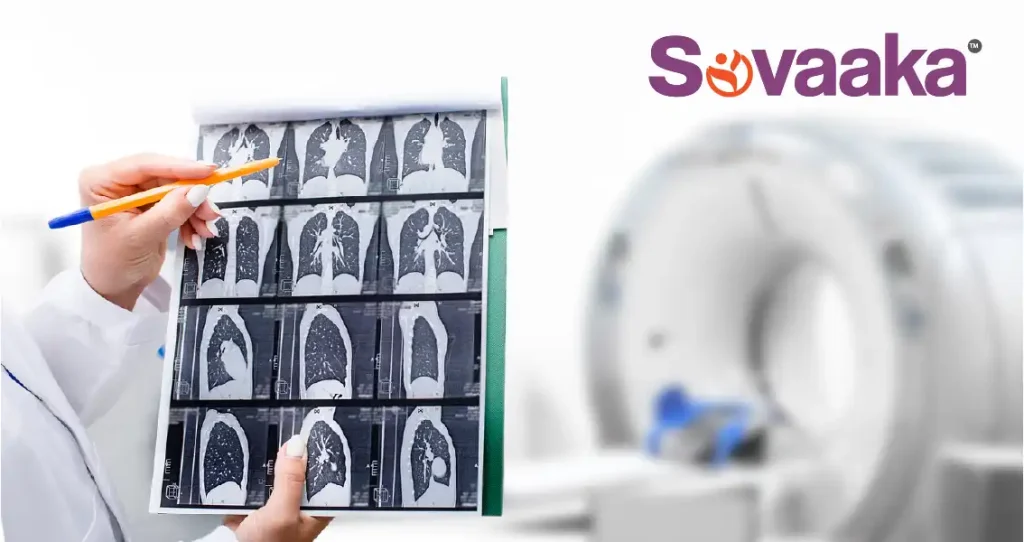
HRCT (High Resolution Computed Tomography) Chest is an advanced imaging scan that provides highly detailed images of the lungs and airways.
Unlike a standard chest X-ray, HRCT uses thin-section imaging to detect very early or subtle changes in lung tissue that may not be visible on routine scans.
At Sovaaka, HRCT Chest is often included as part of preventive wellness screening, offering a deeper understanding of lung health before symptoms appear.
This scan can help detect early signs of:
- Lung inflammation or fibrosis
- Small lung nodules
- Early lung infections
- Airway abnormalities
- Lung changes related to smoking or pollution exposure
Early detection enables timely medical guidance and proactive health management.
When Should You Consider an HrCT Chest?
HRCT Chest may be recommended as part of preventive health evaluation, especially if you:
- Are a smoker or former smoker
- Are frequently exposed to pollution, dust, or occupational chemicals
- Have a family history of lung disease
- Experience persistent cough or breathlessness
- Want a detailed lung assessment as part of preventive screening
- Have had recurrent respiratory infections
It can also serve as a baseline lung assessment for individuals who wish to monitor their respiratory health over time.
Preparation for HrCT Chest
Remove metal objects such as jewelry or accessories
Inform the technician if you are pregnant or may be pregnant
Duration of the Scan
The HRCT Chest scan is quick and comfortable.
Actual scanning time: 5–10 minutes
What Happens During the Procedure?
- The HRCT Chest procedure is non-invasive and painless.
- You will lie on a motorized CT scanning table.
- The table gently moves through the CT scanner.
- The scanner captures high-resolution images of your lungs.
- You may be asked to hold your breath briefly during image acquisition to ensure clear images.
- The scan is completed within a few minutes.
Key Benefits of HrCT Chest Screening
HRCT Chest plays an important role in preventive lung health assessment.
Key benefits include:
- Early detection of subtle lung abnormalities
- High-resolution imaging for accurate lung evaluation
- Identification of small nodules or early lung changes
- Supports timely medical guidance and preventive care
- Helps monitor lung health for individuals at higher environmental or lifestyle risk